
As America marks 250 years of independence, one of its most storied waterways offers a living lesson in what it means to dream big, work hard, and refuse to give up.
A Dream as Old at the Republic
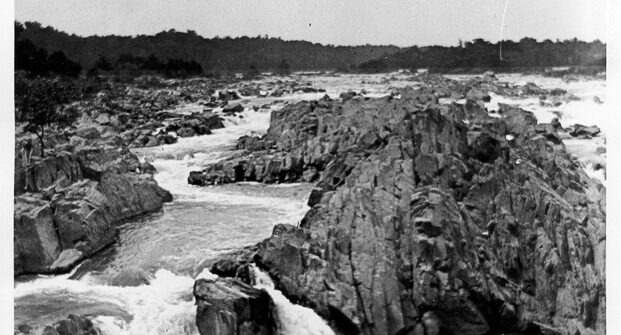
Before there was a canal, there was a vision. George Washington — soldier, president, and inveterate entrepreneur — understood that the young United States would live or die by its ability to connect its people and markets. As early as 1785, he championed the Patowmack Canal Company, an ambitious effort to make the Potomac River navigable from the tidewater to the mountains. His plan was never fully realized, but it planted a seed that would grow into one of America’s greatest infrastructure achievements.
C&O Canal & B&O Railroad: Born on the Fourth of July
On July 4, 1828, exactly 52 years after the signing of the Declaration of Independence, President John Quincy Adams turned a ceremonial shovelful of earth in Little Falls, Maryland, breaking ground on the Chesapeake and Ohio Canal. That same day, the Baltimore and Ohio Railroad held its own groundbreaking just miles away in Baltimore, thus launching a race west by two innovative transportation systems with a shared goal: opening access to the nation’s vast frontier.
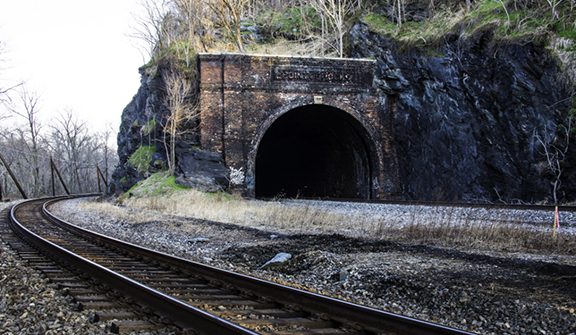
They built side-by-side until they reached a quarter-mile strip of land at Point of Rocks. It took years of court battles and negotiation to make it work, with the railroad eventually blasting a tunnel through the rocky ledge beside the canal.
The result still exists today: a place where water and rail run side by side, and where you can see how competing ideas shaped the nation’s path forward. Lockhouse 28 is also here, where you can spend a night living as the lock keepers once did.
VISIT
- Point of Rocks (mile marker 48.2)
- B&O Railroad Bridge (mile 48.3)
- Lockhouse 28 (mile marker 48.9)
Building a Nation's Backbone
The canal would stretch 184.5 miles from Georgetown, D.C., to Cumberland, Maryland — a staggering feat of 19th-century engineering. Workers blasted through mountain rock to build the 3,118-foot Paw Paw Tunnel, one of the longest canal tunnels in American history.
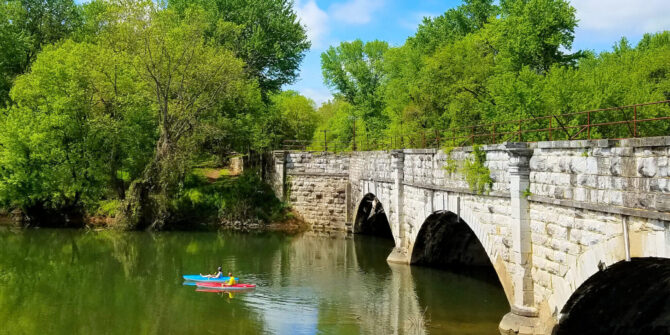
They constructed 11 stone aqueducts to carry the canal over rivers and streams, and hand-cut 74 lift locks to climb 605 feet in elevation from the tidewater to the Allegheny Plateau. Beside many of those locks, lockhouses served as homes for the lockkeepers and their families who operated and maintained the canal around the clock. Today, several have been restored and can be rented for overnight stays.
Keeping the canal operating also required an intricate water-control system. Feeder dams, guard locks, culverts, and waste weirs allowed the canal to function across mountains, valleys, and flood-prone terrain. The C&O Canal is a monument to American ingenuity, built with skill, grit, and determination.
VISIT
- Spend the night in a lockhouse
- Lift Lock 20 at Great Falls Tavern (mile marker 14.4)
- Concocheague Aqueduct (mile market 99.6)
- Paw Paw Tunnel (mile marker 155)
Built by Immigrant Hands
The canal was built by Irish immigrants, along with German, Dutch, and English workers, many of whom came to America seeking opportunity only to find brutal and dangerous work digging through rock and mud. Workers lived in rough shanty camps along the route, endured long hours for little pay, and suffered through cholera outbreaks and labor unrest, with many dying during the effort.
Their labor, along with the labor of generations of canal families who followed, is infused into every stone of every lock. The C&O Canal is, in no small part, a monument to immigrant America.
Life on the Waterway
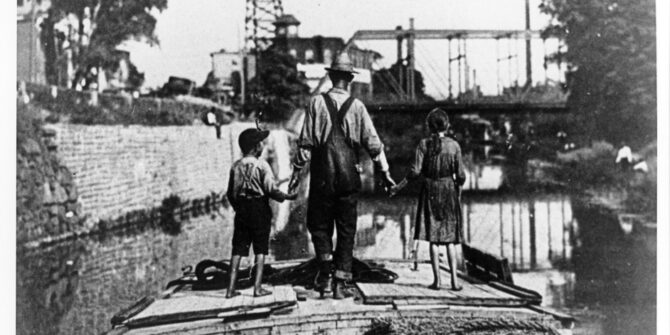
For more than 90 years, the canal was a working world of its own. Mule-drawn boats moved coal, flour, whiskey, and lumber from the mountains to the markets of Georgetown. Lock keepers and their families lived in stone lockhouses along the way, responsible for raising and lowering water levels that moved each boat through, each lock day and night, season after season.
Whole families lived aboard the boats themselves. Children grew up on the water, learning the rhythms of the canal before they could read. It was hard, unglamorous work, but essential to the expansion of the United States.
A Nation Divided, A Canal in the Middle
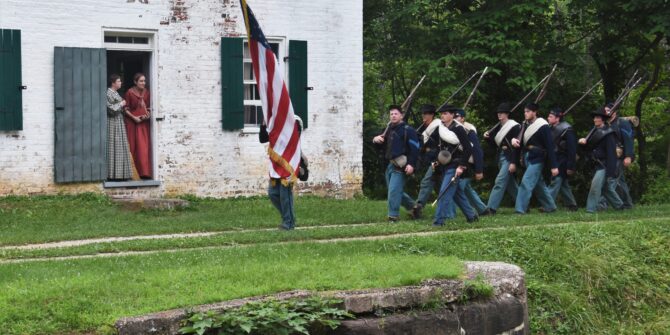
During the Civil War, the C&O Canal became a vital transportation route along the contested border between Union Maryland and Confederate Virginia. Union troops used the canal to move supplies and soldiers, while Confederate forces repeatedly raided and damaged the waterway. Visitors can still explore important Civil War sites along the canal, including Rowser’s Ford and Edwards Ferry, both key Potomac River crossings during the war. You can spend a night at Edwards Ferry in Lockhouse 25 to learn more about the Civil War’s impact on the canal.
Further west, Harpers Ferry and Sharpsburg connected the canal to major Civil War campaigns, including the surrender at Harpers Ferry and the Battle of Antietam. Today, the canal’s towpath, locks, and river crossings still offer visitors a direct connection to the landscapes where soldiers, civilians, and armies once moved through the region.
VISIT
- Rowsers Ford (mile marker 22.1)
- Edwards Ferry and Lockhouse 25 (mile marker 30.9)
- Harpers Ferry
- Sharpsburg
The CCC and a New Kind of Labor
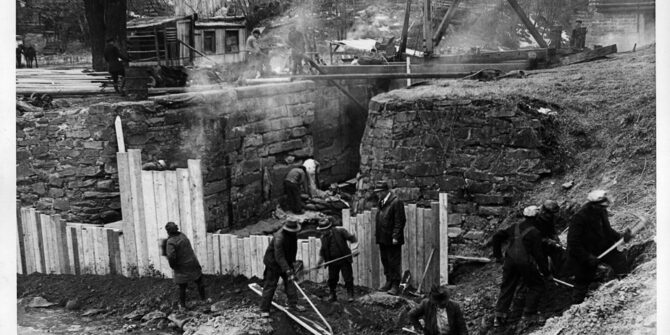
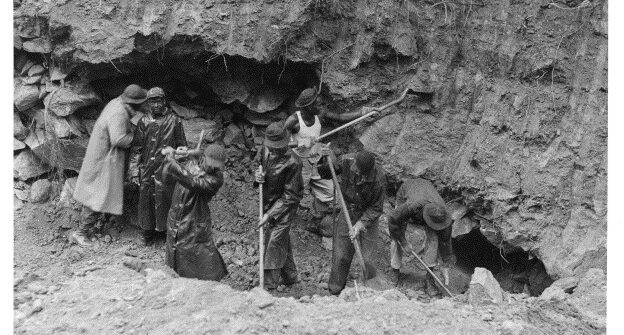
By the early 20th century, the C&O Canal was in decline. Railroads had long since surpassed canal boats in speed and efficiency, and a devastating flood in 1924 delivered the final blow. Commercial operations ended, the locks and aqueducts began to crumble, and the canal risked being abandoned entirely. What helped save it was the work of the Civilian Conservation Corps during the Great Depression.
In the 1930s, Franklin Roosevelt’s CCC sent young men to restore the canal corridor, clearing the overgrown towpath, repairing stonework, and stabilizing historic structures. Among them were several all-Black CCC companies working in a racially segregated program during a deeply unequal era in American history. Their labor helped preserve the canal for future generations and laid the groundwork for what would eventually become the Chesapeake and Ohio Canal National Historical Park.
VISIT
- Carderock Picnic Pavilion (where Camp NP-2-Md. once stood)
Supreme Court Justice William O. Douglas Draws a Line
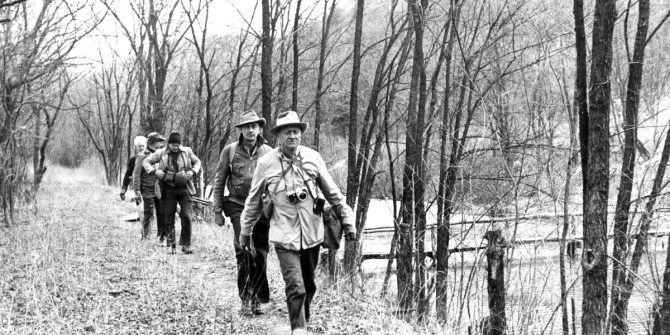
In 1954, Supreme Court Justice William O. Douglas issued an unusual challenge. When The Washington Post editorial board suggested that the canal towpath be paved into a parkway, Douglas invited the editors to walk the full 184.5 miles with him. Nine of them accepted. The eight-day journey changed minds. The Post reversed its position, public momentum built, and in 1971, the C&O Canal was designated a National Historical Park, protecting it for future generations. Douglas’s walk was a reminder that sometimes the most powerful act of conservation is simply showing someone what they stand to lose.
Become a Part of the C&O Canal's Story
Chesapeake and Ohio Canal National Historical Park stretches 184.5 miles from Georgetown in Washington, D.C., to Cumberland, Maryland, preserving both a transportation corridor and the stories of the people who built, worked, fought, and traveled along it. Consistently ranked among the 15 most visited national parks in the country, the canal welcomes hikers, cyclists, paddlers, and history lovers year-round. Along the towpath, visitors pass through historic canal towns, explore preserved locks and aqueducts, and can even stay overnight in one of seven restored lockhouses, a unique experience that allows guests to sleep where lock keepers and their families once lived and worked.
For more than two centuries, Americans have shaped and protected this canal, from the laborers who dug it by hand, to the soldiers who marched beside it during the Civil War, to the volunteers and preservationists who helped save it from ruin in the 20th century.
Today, the C&O Canal Trust continues that work through restoration, preservation, and public engagement, ensuring that future generations can experience this remarkable place and become part of its ongoing story.
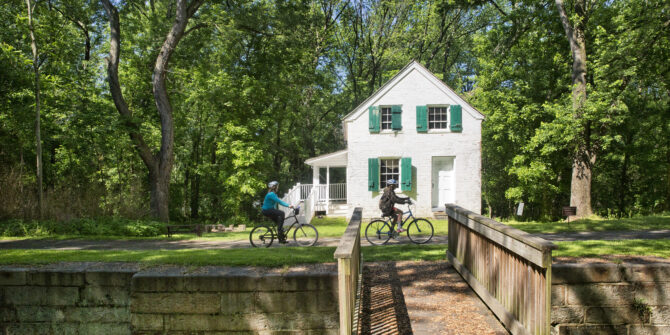
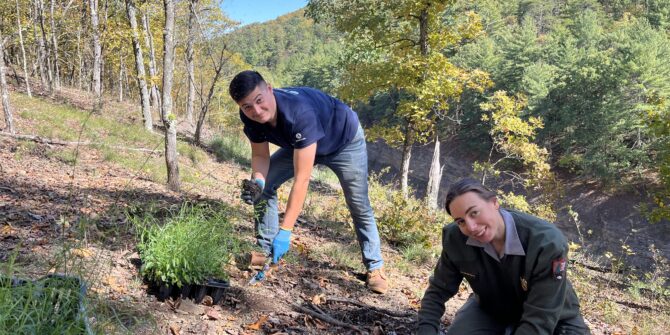
Photo credits: Francis Grant-Suttie, NPS, Bruce Sanders, Turner Photography, Jan Branscome, MJ Clingan