
May is National Preservation Month! This month-long celebration of unique and diverse histories and cultures began in 1973 as National Preservation Week. In 2005, National Preservation Week was extended to an entire month, and today, we celebrate the entire month of May. For the C&O Canal Trust, National Preservation Month gives us the opportunity to reflect on the importance of C&O Canal history and how we can continue to expand preservation efforts of historic structures and natural resources found in the park.
History of the C&O Canal
The C&O Canal began as an idea to use the river as a transportation system to connect the resource rich Allegheny mountains to the Chesapeake Bay. This project, led by George Washington, Thomas Jefferson, and the Potowmack Company, sought to create skirting canals to bypass the tough waters of the Potomac River. In 1802 the construction of these was completed with the opening of the locks at Great Falls. Over a decade later came the formation of the C&O Canal Company, which sought to create a continuous canal along the Potomac River. Once approved the canal’s construction began in 1828.
The C&O Canal project was completed in 1850. Sadly this was several years after the B&O Railroad had been completed. Due to this the type of goods transported were relegated to larger, bulk commodities such as lumber, wheat, and coal. The canal faced many problems, most notably with flooding. In 1924, a flood caused irreparable damage, leading to the closure of the canal.
Sometime later, there were proposals of what to do with the now non-functioning C&O Canal. One was to build dams and flood much of the canal, towpath, and surrounding areas, including many historic structures. The other was to turn the area into a parkway, this plan was endorsed by The Washington Post. It was Justice William O. Douglas and a band of committed conservationists who saved the canal by way of a historic walk of the entire length of the towpath. Then, in 1971, President Nixon designated the C&O Canal as a National Historical Park, protecting the history and natural resources preserved within!
Historic Structures in the C&O Canal National Historical Park
Over 1,300 historic structures can be found within the C&O Canal National Historical Park, each serving as a reminder of the significance of the C&O Canal in our nation’s early transportation history. Floods and other major weather events, funding constraints, and even looting have taken their toll throughout the canal’s nearly two-century-long history. Even so, five percent of all historic structures within the entire National Park System are located in the C&O Canal. As well as having the second most historic structures overall.
Below are a few examples of the iconic historical structures visitors can expect to see when visiting the C&O Canal National Historical Park.
Lockhouses
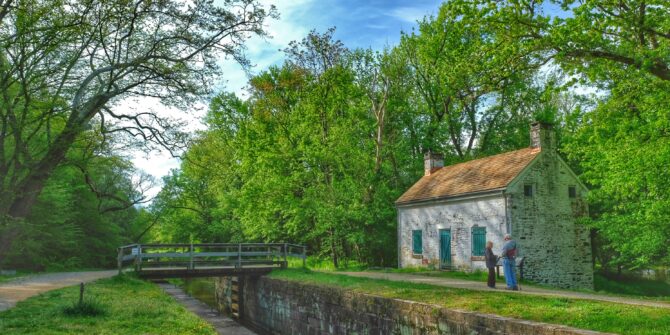
The C&O Canal lockhouses are one of the most notable historic structures found along the canal. At the height of the canal’s operation, these structures housed lock keepers and their families. In exchange for housing and a small wage, lock keepers operated the locks for the boats passing through, sometimes tending to more than one lock at a time. Today, visitors can stay in one of seven available lockhouses as a part of the C&O Canal Trust’s Canal Quarters program.
Locks
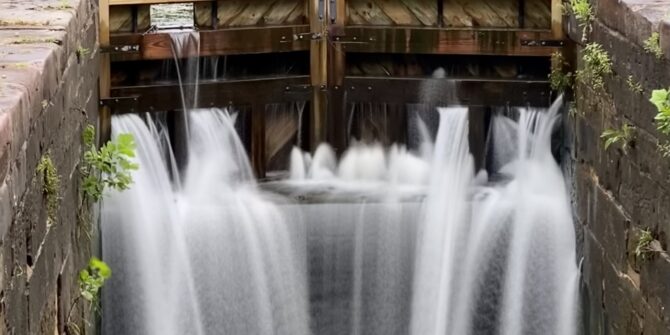
Locks, also sometimes known as “lift locks” are at the heart of canal history. Locks were used to control the elevation of water within the canal, and lock keepers – those who operated the locks – were required to answer the call of traveling boaters at any time of day or night to open or close the lock. Boaters were often traveling the canal in order to transport goods all along the canal, from Cumberland to Georgetown. All along the canal, there are a total of 77 locks and a change in elevation of over 600 feet.
Culverts
Aqueducts
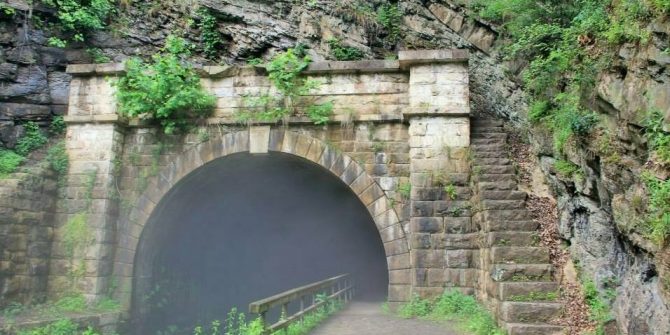
Tunnel
Dams

C&O Canal Trust Preservation at Work
The Towpath
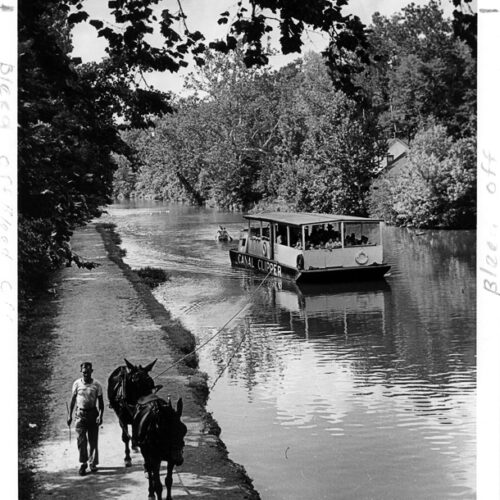
The C&O Canal towpath is the 184.5-mile path by which mules would tow boats along the canal. Now a place of recreation for millions of annual visitors, it was once an important trade route for goods like coal, lumber, and agricultural products. Due to its high foot traffic and natural weathering, the towpath requires rehabilitation to ensure safety and accessibility for recreation. Millions visit the park each year, and subsequently use the towpath for hiking, biking, and more. Before the National Park Service began their towpath rehabilitation initiative, the towpath could be quite dangerous for the casual visitor. With obstructions such as roots, rocks and potholes, the towpath was in need of repair.
Grassroots advocacy from canal enthusiasts has helped the park secure over $7 million in funding from the Maryland State Highway Administration’s Transportation Alternatives Program (TAP) for towpath resurfacing over seven years. Currently, over 120 miles of towpath have been or are in the process of being rehabilitated using TAP funding, National Park Service funding, and support from individual donors through the C&O Canal Trust. Learn more about how our Towpath Forever Initiative actively preserves the park for future generations to enjoy.
Canal Quarters
Those who have explored the park are pretty familiar with seeing lockhouses along the entire length of the C&O Canal. Visitors today may come across historic lockhouses in various stages of deterioration. Fortunately, in partnership with the National Park Service, the C&O Canal Trust has rehabilitated seven of these lockhouses – which now operate as an overnight interpretive program.
Canal Quarters is a unique experience in which guests can reserve their stay in history. With the choice of seven historic Lockhouses to stay in, each house is decorated to evoke a different time period. Canal Quarters is a uniquely immersive experience that allows historians and outdoor enthusiasts to explore the life of a lock keeper.
Revenue generated by the C&O Canal Trust’s award-winning Canal Quarters program directly supports the preservation of these historic buildings. Book your stay today and help make a difference this National Preservation Month.
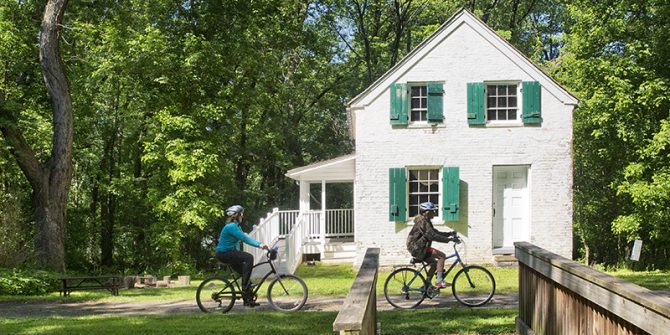
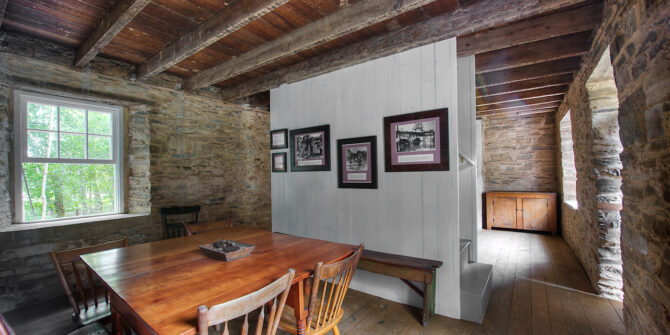
Photo Credits: Jon Wolz, Nicholas Clements, Josh Bowers, Paul Graunke, John Gensor, Wanda Poffenberger, MJ Clingan, NPS, Paul Graunke, and Turner Photography