The days are longer, the temperature is warmer, birds are singing, and the flowers are blooming: spring is in the air! If you’re looking to go and enjoy the spring ephemerals, we’ve picked out some wildflower hotspots that you will be sure to enjoy:
Great Falls, Billy Goat Trails, Gold Mine
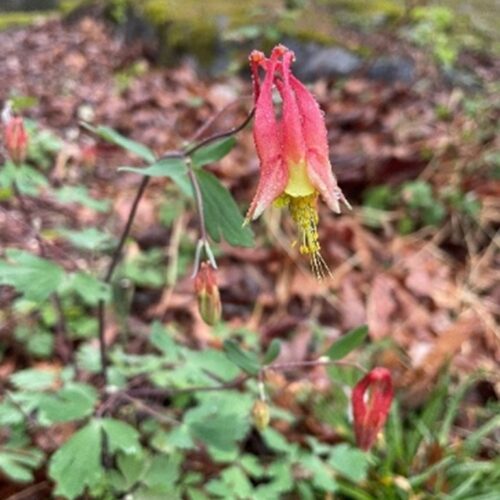
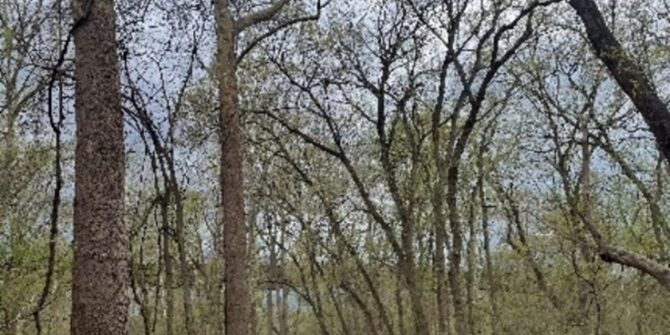
The Great Falls area is a biodiversity hotspot for the Mid-Atlantic region. Home to the globally rare Potomac River Bedrock Terrace Oak-Forest ecosystem, this region is acknowledged for its richness of native flora including rare, threatened, and endangered species. Walk along the towpath to enjoy the wildflowers on the trees of the eastern redbud (Cercis canadensis) and the flowering dogwood (Cornus florida). On the forest floor, you can find beautiful ephemerals including the golden ragwort (Packera aurea), Virginia saxifrage (Micranthes virginiensis), eastern columbine (Aquilegia canadensis), yellow trout lily (Erythronium americanum), violet woodsorrel (Oxalis violacea), plantain-leaved pussytoes (Anetnnaria plantaginifolia), azure bluet (Houstonia caerulea) and golden Alexanders (Zizia aurea).
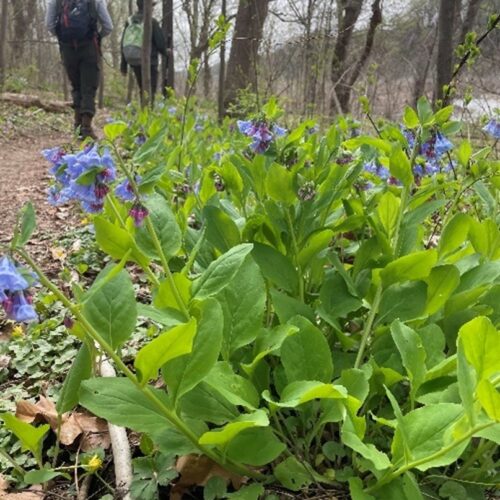
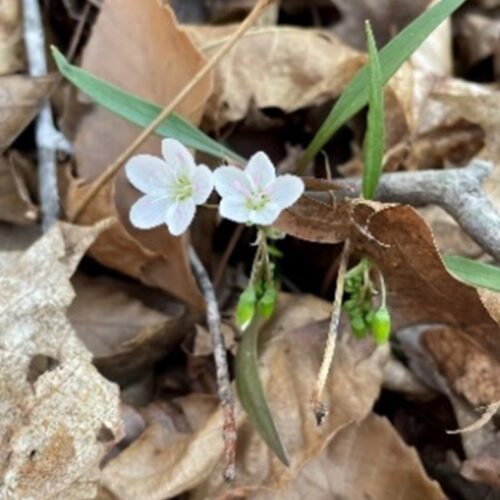
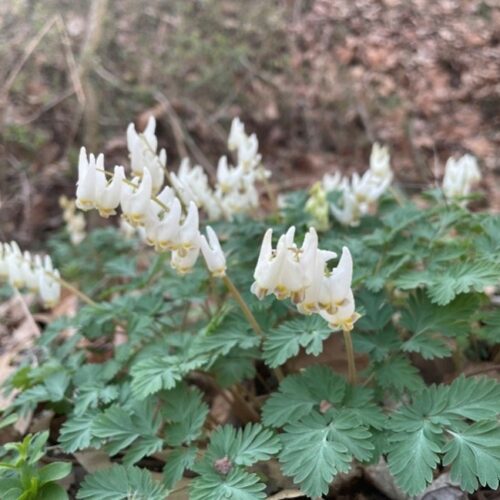
Hiking the trails is where the real fun begins. Along the meandering River Trail, enjoy large swaths of Virginia bluebells (Mertensia virginiana) covering the forest floor. Look closely on the ground, and you may find the small Virginia spring beauty (Claytonia virginica). Look for groupings of dutchman’s breeches (Dicentra cucullaria), squirrel corn (Dicentra canadensis), and cut-leaved toothwort (Cardamine concatenata) and slender toothwort (Cardamine angustata), poking out of leaf litter.
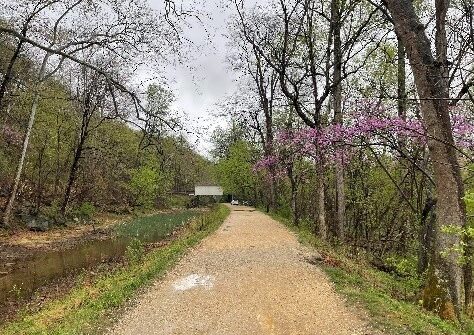
For more arduous hiking and some different foliage explore Billy Goat Trails A, B, & C. In addition to many of the flowers found on the River Trail, the rocky soils are home to moss phlox, (Phlox subulata), rattlesnakeweed (Hieracium venosum), and Coville’s phacelia (Phacelia covelii).
If you want to enjoy a forest stroll, head above the rocks into the woodlands of the Gold Mine trail system and enjoy a beautiful deciduous forest. Look for the characteristic flowers of the tuliptree (Liriodendron tulipifera), and the ground plants showy orchid (Galearis spectabilis), Partridgeberry (Mitchella repens), and narrowleaf blue-eyed grass (Sisyrinchium angustifolium).
Ferry Hill and Lock 38
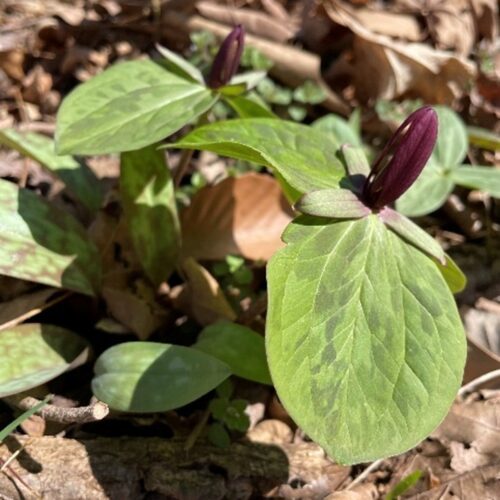
The Ferry Hill Plantation is not only a historical site, but an excellent area to see spring ephemerals. The limestone rock outcroppings foster a plethora of wildflowers to enjoy in a concentrated area. Spicebush (Lindera benzoin) line the towpath with its yellow flowers on full display. Many of the Ferry Hill, with the addition of the toadshade (Trillium sessile), early meadow-rue (Thalictrum dioicum), rue-anemone (Thalictrum thalictroides), plantain-leaved pussytoes (Antennaria plantaginifolia), and mayapple (Podophyllum peltatum).
Harper’s Ferry and Weverton
If you walk on the towpath between Harper’s Ferry National Historical Park and Weverton Cliffs, you’ll find a delightful selection of wildflowers on easy terrain. Lying low on the ground you will see wild ginger (Asarum canadense), which has small, maroon-colored flowers. Wild pinks (Silene caroliniana) habituate under the tree canopy. Yellow fumewort (Corydalis flavula) is not often found on the towpath but is common on the Maryland Heights and Appalachian Trails. Look for previously mentioned flowers such as Virginia bluebells, dutchman’s breeches, cut-leaved and slender toothworts, mayapple and spicebush.
Written by Leah Rubin, Chesapeake and Ohio Canal National Historical Park Biological Science Technician.
Photos by Paul Graunke and NPS.